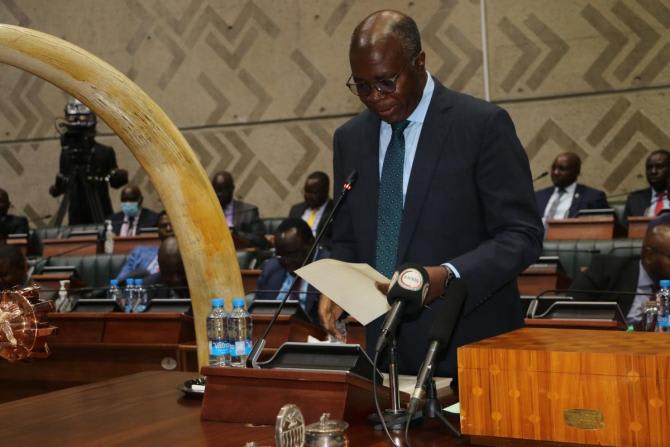
LIVINGSTONE — Dr. Edna Kabala Litana has made history as the first woman to lead the Economics Association of Zambia (EAZ)—but her election comes at a time when the economics profession itself is being tested.
Zambia is navigating a complicated economic landscape: inflation and the cost of living remain important concerns, the exchange rate continues to matter for households and businesses, public debt has reshaped fiscal policy, and the country is under pressure to turn economic growth into jobs, investment and broader prosperity.
It is against this backdrop that Dr. Litana takes over the leadership of the country’s professional association for economists.
She was elected President during the EAZ elective Annual General Meeting held from September 3–4, 2026, at the Avani Victoria Falls Resort in Livingstone.
Her election is historic. But beyond the symbolism of becoming the Association’s first female president, the more consequential question is what the new leadership will do with the platform.
More than a change at the top
The EAZ occupies an unusual space in Zambia's economic policy ecosystem.
It is neither government nor a private-sector lobby. It is a professional association whose members include economists working across academia, government, business, finance, research and development.
That gives the Association the potential to serve as an important bridge between economic theory, policy and the realities facing households and businesses.
But that role also comes with a challenge.
Zambia does not lack economic commentary.
What it often lacks is sustained, independent and technically grounded economic debate that connects policy decisions to their consequences for ordinary people.
That is where the new EAZ leadership has an opportunity to make its mark.
The economics profession is changing
The questions confronting economists today are also changing.
Zambia's traditional economic debates around inflation, interest rates, fiscal deficits, exchange rates and debt remain important. But they now sit alongside new questions around artificial intelligence, digitalisation, climate change, energy security, mineral criticality, global trade disruptions and the changing structure of employment.
For Zambia, the mining economy adds another layer.
The country is seeking to expand copper production while positioning itself to benefit from growing demand for critical minerals. The challenge is not simply extracting more minerals, but determining how mining can generate stronger domestic value chains, investment, skills and long-term economic resilience.
These are questions that require economists to look beyond headline GDP numbers.
From commentary to influence
The new EAZ administration inherits an Association with the opportunity to become more influential in national economic conversations.
That could mean deeper engagement with government budgets and policy proposals, stronger economic research, more accessible public education and greater collaboration between economists in academia, business and public policy.
It could also mean giving younger economists a stronger platform.
Zambia has a growing community of economists working with increasingly sophisticated datasets, modelling tools and digital technologies. The EAZ could play a greater role in connecting this emerging generation to the country's most important economic policy questions.
The test will be whether the Association can convert this professional expertise into something the wider public can actually use.
A historic presidency, a demanding agenda
Dr. Litana's election also comes after a period of interim leadership under Dr. Oswald Mungule's administration.
The new executive therefore represents not simply a change in personnel, but an opportunity for institutional renewal.
Dr. Litana, an economist, academic and entrepreneur with a PhD in Economics from the University of Zambia, now leads a newly elected National Executive Committee that includes figures such as economist John Ng’andu alongside other elected officials.
The composition of the new leadership will matter, but its effectiveness will ultimately be measured by its output.
Can the EAZ become a stronger source of independent economic analysis?
Can it challenge economic assumptions without becoming politically partisan?
Can it make economics understandable beyond conference rooms and policy circles?
And perhaps most importantly, can it help reconnect economic policy with the lived experience of Zambian households and businesses?
Those are bigger questions than who won an election.
Why it matters
The economics profession has considerable influence over how Zambia understands its economic choices.
When inflation rises, economists explain why.
When the kwacha moves, economists analyse the pressures.
When government borrows, economists assess the implications.
When GDP grows, economists ask whether that growth is translating into meaningful improvements in living standards.
The EAZ has the opportunity to bring these conversations together under a stronger professional voice.
Dr. Litana's historic election gives the Association a new face.
The harder task will be giving it a sharper voice.
For Zambia's economists, the next chapter is therefore not simply about representation. It is about relevance.
The country will be watching what its economists have to say—and whether their analysis can help shape what Zambia does next.
Katondo Street Journal will continue to follow the new EAZ leadership and Zambia's evolving economic policy debate.