Zambia needs an ambitious growth agenda, but it must not confuse the development priorities of an elected administration with the long-term aspirations of the nation.
The Government's Grow Zambia Agenda represents an important shift towards production, investment, exports and economic expansion. After years of focusing largely on economic stabilisation, Zambia needs to strengthen its productive capacity, create jobs and translate macroeconomic stability into tangible improvements in people's livelihoods.
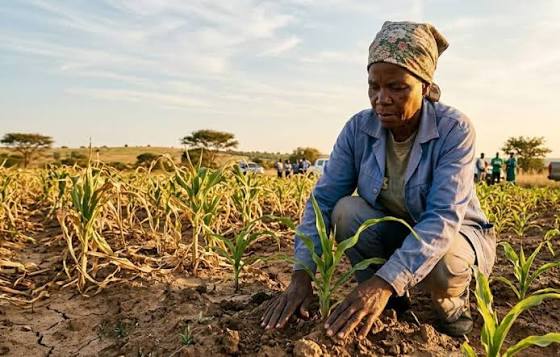
The ambition is clear. By 2031, Government wants Zambia to produce 10 million tonnes of maize, generate 10,000 megawatts of electricity, attract five million tourists annually, produce three million tonnes of copper and three million tonnes of soya beans, among other targets.
These are ambitious objectives, and the country needs ambition.
However, an important question arises about how the Grow Zambia Agenda fits into the country's broader national development planning framework. While the agenda provides a clear direction for the current administration, there is a risk that a relatively short-term political and economic programme could overshadow the need for a longer-term national development vision.
A government agenda is not necessarily a national vision.
The distinction between government priorities and national aspirations
In a democracy, an elected administration should have the freedom to develop its own economic programme, establish priorities and set measurable targets against which citizens can assess its performance.
That is part of democratic accountability.
Government policies and programmes are coordinated through established institutions, including the policy coordination structures within Cabinet Office. These institutions play an important role in translating political priorities into government policies and programmes.
However, there is an important distinction between the policy priorities of the government of the day and the long-term aspirations of the Zambian state.
An administration may prioritise agriculture, mining, energy or tourism. A subsequent administration may have different priorities, approaches and economic philosophies. That is the nature of democratic politics.
But the country's fundamental development objectives should not be constantly reinvented every time political leadership changes.
A country needs continuity in its long-term economic direction, even when governments change.
What happened to Vision 2030?
In December 2006, under the late President Levy Mwanawasa, Zambia launched its first written long-term national development plan, Vision 2030.
Its central aspiration was to transform Zambia into a prosperous middle-income nation by 2030.
The significance of Vision 2030 was not simply its targets. It was the recognition that national development required a shared destination extending beyond the political tenure of any administration.
The vision was designed to be implemented through successive medium-term National Development Plans and annual budgets, beginning with the Fifth National Development Plan.
In other words, the long-term vision provided the destination, while successive governments and their development plans provided the successive stages of the journey.
The Fifth, Sixth, Seventh, Eighth and now Ninth National Development Plans should ideally be understood as instruments for advancing a common national aspiration, rather than independent development programmes disconnected from one another.
Of course, implementation has not always matched ambition. Zambia has experienced economic shocks, fiscal pressures, policy inconsistencies and changes in development priorities.
Nevertheless, the principle behind Vision 2030 remains relevant.
The country needs a development destination that is bigger than the administration currently in office.
The Ninth National Development Plan and the Grow Zambia Agenda
Government is preparing the Ninth National Development Plan (9NDP) for the period 2027–2031.
The 2027 Budget framework indicates that the plan will be anchored on the Grow Zambia Agenda, with a monitoring and evaluation framework to track implementation.
There is nothing inherently wrong with this arrangement.
Aligning a government's economic agenda with its medium-term development plan can improve coordination, resource allocation and accountability. It can also ensure that the government's political commitments are reflected in national budgeting and implementation.
However, it raises an important planning question: What is the long-term national framework that the Ninth Development Plan is ultimately working towards?
Vision 2030 is approaching the end of its planning horizon. Zambia is therefore at an important point in its development planning history.
The country should be thinking seriously about its successor long-term vision.
Perhaps it is time to consider a Zambia Vision 2063 or Vision 2064, aligned with the African Union's Agenda 2063 and the country's centenary of independence.
Such a vision would provide a generational framework within which successive administrations could develop their own medium-term programmes.
Without this framework, there is a risk that national development planning becomes increasingly centred on the immediate priorities of whichever administration is in power.
The danger is not that the Grow Zambia Agenda has targets for 2031. The danger would be allowing those targets to become the ultimate definition of Zambia's development ambitions.
Long-term planning must survive political transitions
Consider some of the investments Zambia needs to make.
Energy infrastructure, railway networks, irrigation systems, human capital development, industrialisation, research and technological capacity are not projects that can be meaningfully planned around a single five-year political cycle.
They require sustained investments, policy consistency and institutional commitment over decades.
A railway project may take ten years to complete. Developing a competitive manufacturing sector may take twenty years. Transforming education outcomes and building a skilled workforce requires even longer.
If every incoming administration changes the country's strategic direction, these investments risk becoming fragmented, delayed or abandoned.
This is not an argument against democratic choice. Governments must retain the flexibility to change policies where evidence suggests that previous approaches are not working.
But changing the means should not necessarily mean abandoning the destination.
Importantly, Zambia already has a legislative foundation for this approach. The National Planning and Budgeting Act No. 1 of 2020 provides for long-term development planning and establishes a framework through which medium-term national development plans should operationalise the country's long-term development aspirations.
This is an important institutional principle that deserves greater attention.
Long-term planning should not depend solely on the goodwill of successive political administrations. It should be supported by institutions, legislation and accountability mechanisms.
What should Zambia do differently?
As the country prepares to implement the Ninth National Development Plan, there is an opportunity to strengthen the entire national planning architecture.
First, Zambia should develop a successor long-term national vision, ideally with a horizon extending to 2063 or 2064.
This should be a genuinely national exercise, involving political parties, the private sector, academia, civil society, traditional leaders, local communities and other stakeholders.
It should not simply be another government document. It should represent a broad national consensus on where Zambia wants to be economically and socially over the next generation.
Second, successive National Development Plans should be explicitly anchored to this long-term vision.
The Grow Zambia Agenda can then serve as the current administration's programme for accelerating progress towards those objectives. Future administrations should have the freedom to develop their own programmes while remaining accountable to the country's longer-term aspirations.
Third, Zambia needs stronger institutional mechanisms for continuity.
Long-term infrastructure projects, strategic industrial investments, human capital development and other national priorities should have clear implementation frameworks, financing arrangements and monitoring mechanisms that extend beyond individual administrations.
Finally, long-term planning must be backed by credible financing. A vision that is not reflected in national budgets, public investment decisions and private sector investment priorities risks becoming another document that gathers dust on government shelves.
The bigger picture
The ambition behind the Grow Zambia Agenda deserves recognition. Zambia needs to move beyond economic stabilisation towards sustained economic expansion. The emphasis on production, exports, investment and wealth creation is necessary.
But the country must be careful not to confuse an ambitious five-year growth programme with a long-term development strategy.
The late President Levy Mwanawasa's administration recognised something important in 2006: Zambia needed a shared national vision that could guide successive governments.
Nearly two decades later, that principle is arguably even more important.
Zambia is approaching its 62nd year of independence. The next generation of Zambians should not have to wait for another political administration to decide what kind of country they want to become.
The country needs to establish where it is going, what kind of economy it wants to build, what institutions it wants to establish and what opportunities it wants to create for future generations.
Grow Zambia should help the country get there. But first, Zambia must agree on where 'there' is.
A country needs governments that can deliver on their promises. But it also needs a national vision that outlives them.