Zambia's trade data says Switzerland is our biggest copper customer. Switzerland's own trade data tells a very different story. The difference points to a problem deeper than a statistical mismatch.
Copper is Zambia's economic lifeline.
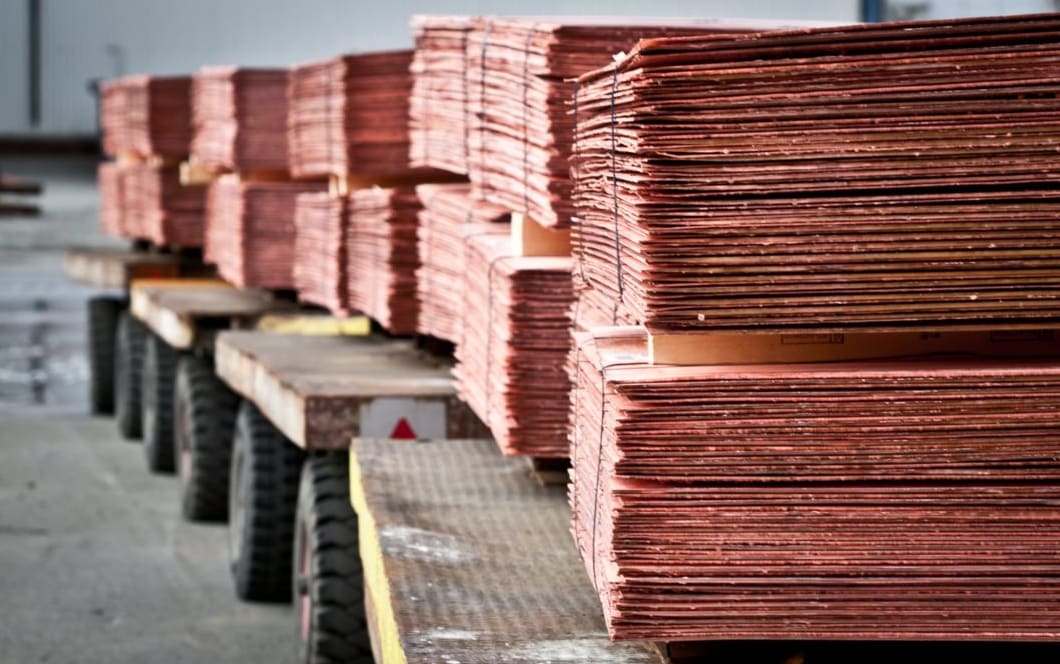
In 2024, the country earned about US$7.6 billion from copper, accounting for roughly two-thirds of total exports. For an economy this dependent on one commodity, knowing where that copper ends up is more than a statistical exercise. It matters for trade policy, taxation and understanding where value is being created.
Yet Zambia's official trade data appears to put much of its copper in an unlikely place: Switzerland.
According to Zambia's records, the country exported US$4.66 billion of copper to Switzerland in 2024, equivalent to about 496,000 tonnes and 61% of total copper exports. The previous year, Zambia recorded US$4.16 billion going to Switzerland.
That makes Switzerland, on paper, Zambia's largest copper market by a considerable margin.
There is one problem.
Switzerland's own trade statistics barely show the copper.
The copper goes somewhere else
UN Comtrade data provides a useful way of looking at the discrepancy because countries report both their exports and imports.
China, for example, reported importing about 560,000 tonnes of Zambian copper in 2024. Zambia recorded only about 279,000 tonnes going directly to China.
India reported around US$1.7 billion, or 191,000 tonnes, of copper imports from Zambia. Zambia's records show almost none going directly to India.
The pattern is similar in 2023.
When the differences are added up, the additional copper reported by China and India is remarkably close to the volume Zambia attributes to Switzerland.
In 2024, the China-India discrepancy is roughly 472,000 tonnes, compared with the 496,000 tonnes Zambia records as exports to Switzerland.
In 2023, the corresponding figures are about 517,000 tonnes and 503,000 tonnes.
That does not mean copper disappeared.
It points to something more familiar in global commodity markets: the difference between who buys a commodity and where the commodity physically goes.
Geneva on the invoice, China at the smelter
Switzerland is home to some of the world's largest commodity trading companies.
A Zambian copper producer can sell its copper to a trading company incorporated in Switzerland. The trader can then sell that copper to a smelter in China or India.
The copper may travel directly from Zambia to Asia.
The commercial transaction, however, may pass through Switzerland.
For trade statistics, those are two different things.
Zambia's records appear to capture the commercial counterparty. China's and India's statistics capture the physical origin of the goods.
So the copper can be Swiss on the invoice without ever becoming Swiss at the border.
That distinction matters.
Why the numbers matter
It would be easy to dismiss the issue as a technical problem with trade statistics. After all, the broad numbers are not wildly different.
Partner countries collectively report roughly US$7.2 billion of copper imports from Zambia, compared with Zambia's approximately US$7.6 billion of exports.
The issue is not necessarily that billions of dollars of copper are missing.
It is that our data may be telling us the wrong story about where our copper market actually is.
There are at least three consequences.
First, it distorts our picture of Zambia's markets.
If most of the copper physically ends up in China and India, but our trade statistics identify Switzerland as the destination, policymakers are looking at an inaccurate map of Zambia's export economy.
That affects everything from trade negotiations to market analysis.
Second, it makes the pricing chain harder to see.
A mining company may sell copper to a commodity trader, which subsequently sells it to a final buyer.
There can therefore be a difference between the price at which the copper leaves Zambia and the price at which it is ultimately sold to the smelter.
That does not automatically mean there has been wrongdoing. But where related companies are involved, the structure can create transfer-pricing and tax risks that deserve scrutiny.
For Zambia, the question is whether the price declared at export properly reflects the value of the transaction.
Third, it weakens one of the simplest tools available to tax and customs authorities: mirror statistics.
Mirror statistics compare what Zambia says it exported with what its trading partners say they imported.
They are particularly useful for identifying unusual gaps.
But the exercise becomes much harder when Zambia records Switzerland as the destination while China records Zambia as the origin.
A discrepancy can then have several explanations: differences in statistical methodology, intermediary trading arrangements, timing, valuation — or potentially something more serious.
The data alone does not tell us which.
So what should Zambia do?
The answer is not to stop selling copper through international trading houses.
Commodity trading is a normal part of the global copper market.
The better approach is to make the transaction chain more visible.
Record both the buyer and the destination. Export documentation should distinguish between the country of the commercial buyer and the final destination of the physical shipment.
Track merchanting arrangements. Zambia should have a clearer statistical picture of commodities sold through intermediary trading hubs, particularly where the goods never enter the intermediary country.
Strengthen price verification. ZRA can compare declared export prices with international benchmarks such as the London Metal Exchange and, where possible, the prices recorded by final importing countries.
Build stronger data links with major buyers. Regular information exchange with China, India and other major copper destinations would allow authorities to compare shipments rather than relying primarily on annual trade totals.
None of this proves that Zambia is losing tax revenue or that commodity traders are doing anything improper.
The more immediate finding is simpler: Zambia's trade statistics do not always tell us where its copper physically ends up.
And for a country where copper accounts for roughly two-thirds of exports, that is not a small statistical detail.
Zambia mines the copper.
We should know where it goes.
Source: UN Comtrade, 2023–2024. Zambia's exports are valued on an FOB basis, while partner-country imports are generally recorded on a CIF basis. Copper analysis covers HS Chapter 74 and copper ores and concentrates under HS 2603.