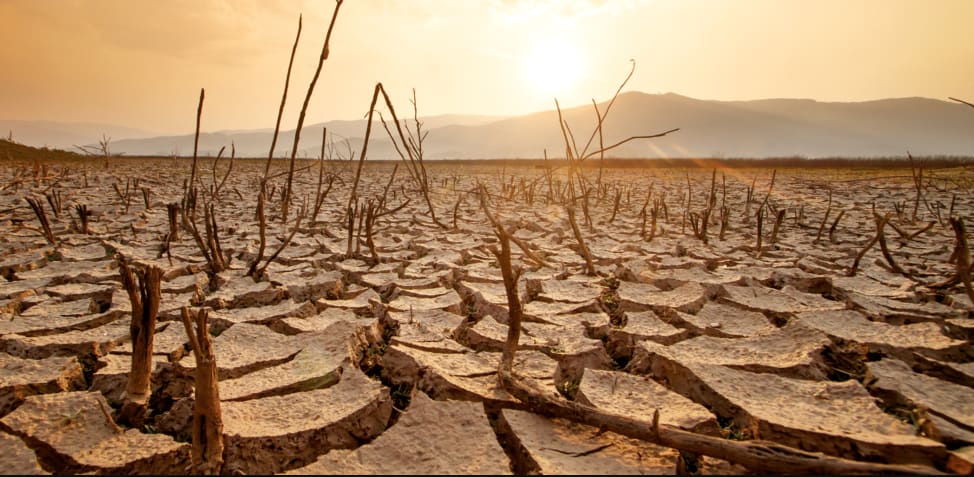
There is something almost philosophical about El Niño.
The name comes from the Spanish El Niño, meaning “the boy,” and historically referred to the appearance of unusually warm waters along the Pacific coast of Peru and Ecuador around Christmas — El Niño de Navidad, the Christ Child. Long before satellites, ocean buoys and sophisticated climate models, fishermen had already noticed that the ocean was capable of changing its behaviour and, with it, their livelihoods.
There is an important lesson in that history.
Nature often gives signals before it gives consequences.
The challenge for societies is learning how to listen.
For Zambia, this may matter again.
A statistical and machine-learning forecasting system I have been developing using historical Oceanic Niño Index data from 1950 to 2026 has identified a very strong El Niño signal emerging in 2026.
The latest observation in the model is June 2026. The recorded ocean temperature anomaly is +1.50°C, and the system classifies the current ENSO state as El Niño.
More importantly, the historical series shows that the threshold was crossed around March 2026.
The question is therefore no longer simply whether an El Niño signal exists.
The more important question is:
What should Zambia do with the information?
The lesson of Pharaoh and Joseph
There is an old story that offers a surprisingly modern way of thinking about this.
In Genesis, Pharaoh dreams of seven years of abundance followed by seven years of famine. Joseph interprets the dream and recommends something remarkably practical: during the years of abundance, Egypt should save enough resources to survive the years of scarcity.
Whether one approaches the story as theology, history, literature or economics, the underlying principle is powerful.
A forecast is valuable not because it predicts the future perfectly, but because it gives society time to prepare for an uncertain future.
That is precisely how we should think about El Niño.
The objective should not be to claim that we can predict exactly how much rain Lusaka, Chipata or Choma will receive.
Climate systems are considerably more complicated than that.
The objective is to identify a sufficiently strong signal early enough to allow farmers, businesses, financial institutions and government to make better decisions.
And right now, the signal deserves attention.
The strange history of El Niño
Looking through the historical ENSO record produces another interesting observation.
The El Niño episodes identified in the historical series include years such as:
1972, 1982, 1987, 1991, 1992, 1995, 1997, 2002, 2004, 2006, 2009, 2015, 2018 and 2023.
At first glance, there appears to be something resembling a rhythm.
1972 to 1982: 10 years
1982 to 1987: 5 years
1987 to 1991: 4 years
1991 to 1992: 1 year
1992 to 1995: 3 years
1995 to 1997: 2 years
1997 to 2002: 5 years
2002 to 2004: 2 years
2004 to 2006: 2 years
2006 to 2009: 3 years
2009 to 2015: 6 years
2015 to 2018: 3 years
2018 to 2023: 5 years
It is tempting to conclude that the cycle is getting shorter.
But that would go beyond what the data can support.
ENSO does not operate like a clock. Scientists generally describe El Niño and La Niña as irregular phenomena, with events commonly recurring every two to seven years rather than according to a fixed timetable.
The more interesting observation is therefore not that the cycle is mechanically shortening.
It is that the intervals can cluster remarkably closely.
Nature appears to have memory without necessarily having a schedule.
That is precisely the kind of problem for which statistical modelling becomes useful.
What does the model say about 2026?
The forecasting system does not rely on a single technique.
It combines three different approaches.
The first is a SARIMAX time-series model, designed to capture temporal patterns and persistence in the historical ENSO data.
The second is a gradient-boosted machine-learning classifier, which looks for nonlinear relationships in the historical data and classifies the likely ENSO state.
The third is a classical Markov-chain transition model, which approaches the problem from the perspective of transitions between states: El Niño, Neutral and La Niña.
The forecasts are then blended.
This is important because every model has weaknesses.
A time-series model may capture persistence particularly well but fail to capture complex nonlinear relationships.
A machine-learning model may detect patterns that a conventional statistical model misses, while also being more susceptible to historical peculiarities.
A Markov model is comparatively simple, but it provides an independent perspective on how the system transitions between states.
Rather than allowing one model to dictate the answer, the system asks what happens when these different approaches are considered together.
And the answer is striking.
September 2026 forecast
Using information available through June 2026, the blended forecast for September 2026 is:
El Niño: 94.1%
Neutral: 5.5%
La Niña: 0.4%
The system therefore identifies El Niño as overwhelmingly the most likely ENSO state for September 2026.
See app in detail below:
The app's live classification layer produces an even stronger signal, assigning approximately 99.1% probability to El Niño, against 0.8% for Neutral and 0.1% for La Niña.
That does not mean there is a 94.1% probability that Zambia will experience drought.
That distinction is extremely important.
The model is forecasting ENSO, not Zambian rainfall.
ENSO is a large-scale climate phenomenon. Translating that signal into a prediction about rainfall in Zambia requires another layer of modelling involving rainfall history, geography, atmospheric conditions, seasonality and potentially soil moisture and temperature.
But the ENSO signal is still economically valuable.
It gives us something that every risk manager wants:
time.
From the Pacific Ocean to a Zambian maize field
Why should Zambia care about a temperature anomaly in the Pacific Ocean?
Because climate does not respect economic borders.
The 2023/24 El Niño episode demonstrated this brutally.
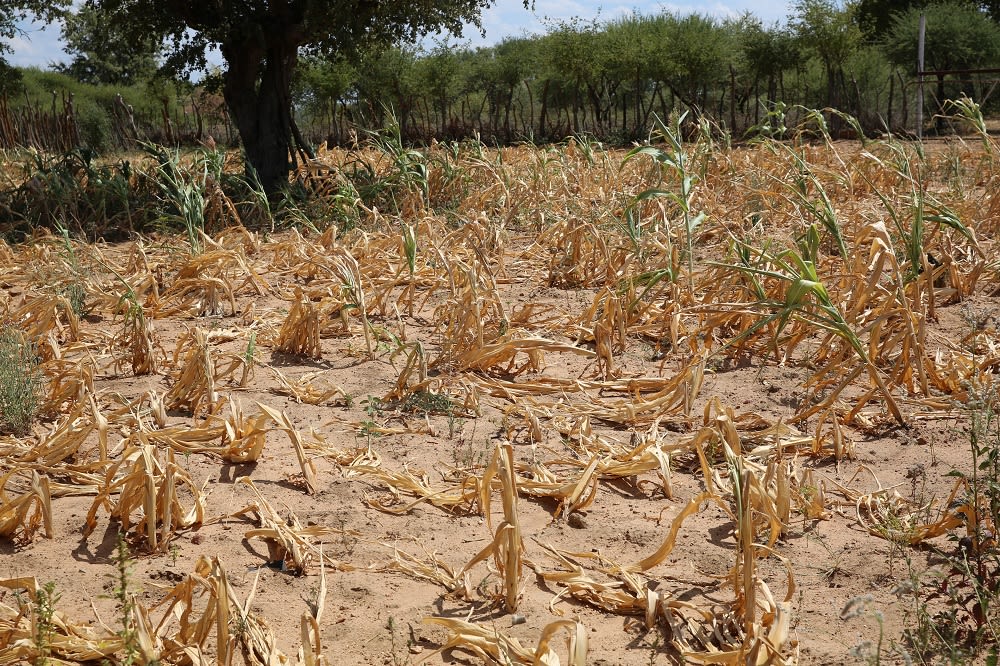
Zambia experienced one of its most severe droughts in decades. Agricultural production was heavily affected, particularly maize. The consequences subsequently moved beyond farms and into markets, households and public finances.
The chain is familiar:
Climate shock → agricultural shock → food-supply shock → price shock → household-income shock → fiscal pressure.
That is the real economic significance of El Niño.
It is not simply a weather story.
It is a risk transmission mechanism.
When rainfall fails, farmers lose production.
When production falls, food availability tightens.
When supply tightens, prices rise.
When food prices rise, household purchasing power falls.
When households struggle, government intervention becomes more important.
Suddenly, something that began thousands of kilometres away in the Pacific becomes an issue for the Bank of Zambia, the Ministry of Agriculture, grain traders, banks, insurers and ordinary households.
Perhaps we are asking the wrong question
The conventional question is:
“Will El Niño cause drought?”
A better question is:
“What can we do if the probability of an El Niño event becomes sufficiently high?”
That changes everything.
A farmer might reconsider crop choices.
An agricultural lender might reconsider portfolio exposure.
An insurer might reassess agricultural risk.
A grain trader might review inventory positions.
Government might consider strategic grain stocks earlier.
Irrigation investments might become more urgent.
Water utilities might stress-test supply.
Development agencies might bring forward resilience programmes.
And financial institutions could begin pricing climate risk into agricultural lending.
The forecast becomes valuable not because it tells us exactly what will happen, but because it allows decisions to be made before the consequences arrive.
The case for Njala Insurance
This is where the idea of Njala Insurance becomes particularly interesting.
The concept is built around a simple proposition: Zambia should explore agricultural insurance mechanisms that are designed around the realities of smallholder farmers and the risks they actually face.
Traditional insurance asks the farmer to pay a monetary premium.
But for a farmer whose biggest asset is the harvest itself, there may be another way to think about the transaction.
What if insurance could be connected more directly to expected agricultural output?
What if farmers could contribute a portion of their harvest or expected production into a risk-pooling mechanism?
The ancient Joseph story provides the philosophical metaphor.
Store something during abundance because scarcity is possible.
Modern statistics provide the other half of the idea.
We now have increasingly sophisticated ways of identifying when the probability of climate disruption is rising.
The combination of the two is powerful:
Ancient wisdom tells us to prepare.
Modern statistics tell us when the risk may be rising.
Financial innovation determines how we can act on that information.
We should not confuse prediction with prophecy
There is also a danger in all of this.
A 94.1% probability can sound like certainty.
It is not.
A statistical forecast is not prophecy.
It is a statement about probability conditional on the data, model structure and assumptions used.
The model could be wrong.
The atmosphere could behave differently.
ENSO could transition unexpectedly.
And even if El Niño develops exactly as anticipated, Zambia's rainfall response will not necessarily mirror the previous event.
This is why good forecasting should never produce complacency.
It should produce preparedness.
The objective is not to predict the future perfectly.
The objective is to reduce the cost of being surprised.
The ocean is giving us a warning before the fields do
There is something profound about the fact that the earliest signal of a potential agricultural crisis may come from an ocean thousands of kilometres away.
A fisherman sees the ocean changing.
A meteorologist sees atmospheric patterns.
A statistician sees a distribution shifting.
A machine-learning model sees probabilities.
A farmer eventually sees the consequences in the field.
These are not separate events.
They are different points along the same system.
The opportunity for Zambia is to connect them.
We should be building systems in which climate information flows into agricultural planning, financial risk management, insurance, food-security policy and investment decisions.
Because by the time the farmer sees the drought, it may already be too late to prepare.
The next Pharaoh moment
The emerging 2026 El Niño signal should therefore not be treated as a reason for panic.
It should be treated as an opportunity to test whether Zambia has learned the lesson of 2023/24.
If the models are wrong, preparation will have cost something.
If the models are right, preparation could save considerably more.
That is the economics of uncertainty.
We do not need certainty before acting.
We need risk-adjusted decisions.
Perhaps this is ultimately what the story of Pharaoh and Joseph was trying to teach us.
The wisdom was not in knowing exactly what the future would look like.
The wisdom was in recognising that good years and bad years could coexist within the same system — and that a society capable of looking ahead could use the former to prepare for the latter.
The Pacific Ocean has begun sending another signal.
The latest statistical evidence suggests that El Niño is overwhelmingly the most likely ENSO state for September 2026.
Zambia should listen.
Not because the future is certain.
But because uncertainty is precisely why preparation matters.
And sometimes, the difference between a crisis and a manageable shock is not whether we knew what was coming.
It is whether we were willing to act when the probability became high enough.