A strange August shower in Lusaka may have been easy to dismiss. But behind the unusual weather is a much bigger story about a changing climate, an approaching El Niño and the economic risks Zambia should already be preparing for.
On 13 August, Zambia had other things on its mind.
The country was consumed by elections. Conversations revolved around polling stations, voters, political parties, turnout, results and what the next five years might look like. For a few days, almost everything else seemed secondary.
And then, in parts of Lusaka, it rained. Not November rain. Not December rain. Not the familiar afternoon downpour that arrives after the clouds have gathered over the capital during the wet season. August rain.
For most people, it was probably little more than an oddity. Some may have welcomed it. Others may simply have carried on with their day. In a country where rain is such a familiar part of life, it is easy to forget just how unusual rainfall can be during the heart of the dry season.
Zambia's rainfall follows a remarkably distinct seasonal pattern. The wet season generally runs from around September or October through April, driven largely by the movement of the tropical rain belt. August, by contrast, sits firmly within the country's dry and cool season. The IMF describes the period from May to August as particularly dry, while climate assessments of Zambia note that rainfall is generally concentrated in the wet season.
So an August shower in Lusaka is not, by itself, evidence of climate change. Nor can we say that El Niño caused the rain. Weather is too complicated for that kind of conclusion.
But perhaps that is precisely why we should pay attention.
The important climate story is not necessarily that it rained on one unusual August afternoon. It is that the weather patterns on which Zambia's economy has depended for generations are becoming increasingly difficult to take for granted.
Climate change does not always announce itself with a dramatic flood or a catastrophic drought. Sometimes it appears in smaller ways: an unusually warm winter morning, a strange dry spell, a storm arriving at the wrong time, rainfall becoming more erratic, or a season beginning differently from what farmers have come to expect.
These events can seem insignificant when viewed individually. Their significance becomes clearer when they form part of a longer pattern.
And now, as Zambia looks towards the 2026–27 rainy season, another warning is becoming increasingly difficult to ignore.
El Niño is coming.
In fact, it is already developing. The World Meteorological Organization warned earlier this year that El Niño was expected to develop from mid-2026, with the phenomenon likely to influence global temperature and rainfall patterns. By June, the WMO was putting the probability of El Niño continuing into November at around 90 percent or higher. The latest forecasts are even more striking.
On 13 August — the same day Zambians were going to the polls — the US National Oceanic and Atmospheric Administration's Climate Prediction Center issued an El Niño Advisory. Its latest assessment puts the probability of a very strong El Niño at more than 90 percent during the Northern Hemisphere autumn and winter of 2026–27. There is also a 69 percent probability that the October–December period could reach historically extreme levels.
That does not mean Zambia will automatically experience a drought. El Niño is a global climate phenomenon and its local effects are complicated. But Southern Africa is one of the regions where the relationship between El Niño and rainfall has historically mattered greatly.
For Zambia, that should immediately get the attention of anyone thinking seriously about the economy.
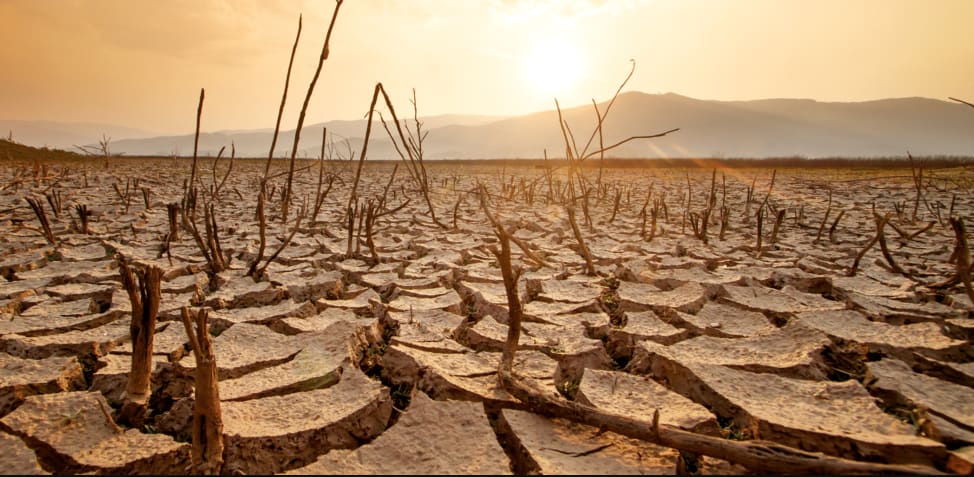
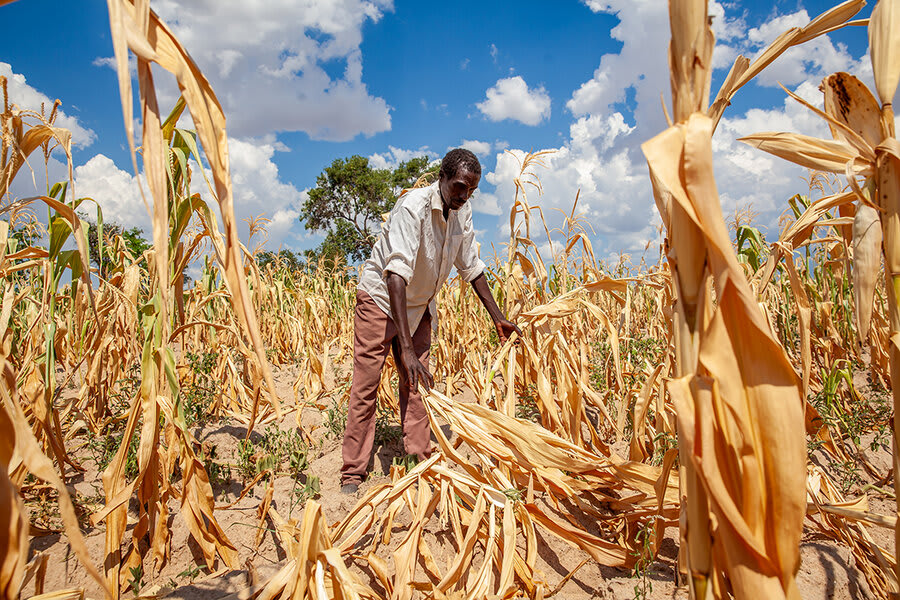
We have been here before. The 2023–24 El Niño season produced one of the worst droughts Zambia had experienced in decades. Agriculture was badly affected, food insecurity increased and the country's dependence on hydropower became a major economic vulnerability. The drought demonstrated something that economists sometimes forget when constructing models: rainfall is an economic variable.
When the rains fail, maize production suffers. When maize production falls, food prices come under pressure. When water levels decline, hydropower generation suffers. When electricity becomes unreliable, businesses reduce production or increase their operating costs. When farmers lose income, rural demand weakens. When food and electricity have to be imported, foreign-exchange pressures can increase.
A climatic shock can therefore move through an economy in much the same way as a financial shock.
It starts in the atmosphere and eventually arrives in household budgets, business balance sheets and government accounts.
That is why the coming El Niño should not be treated as a story exclusively for farmers.
It is a story for the Bank of Zambia. It is a story for the Ministry of Finance. It is a story for ZESCO, farmers, manufacturers, banks, retailers and investors. It is a story for anyone trying to understand Zambia's inflation, food security, electricity supply and economic growth over the next twelve months.
The African Union has already been urging countries to move away from simply responding to climate disasters after they occur and towards anticipatory action. Its 2026 continental discussions on El Niño have specifically highlighted agriculture, energy, water, infrastructure, health and other climate-sensitive sectors.
That is the right approach.
Because the biggest mistake Zambia could make is to wait for the drought to become obvious before treating it as a serious economic risk.
By then, the farmer may already have planted. The reservoir may already be falling. The electricity deficit may already be appearing. The price of maize may already be rising.
Preparation works precisely because it happens before the crisis becomes visible.
And there is a particularly uncomfortable irony about the timing of all this.
Zambia has spent much of 2026 looking at politics. The election has understandably consumed public attention. The country has been debating who should lead, what policies should change and what the next political chapter will look like.
But while we have been watching the ballot, another process has been unfolding thousands of kilometres away in the Pacific Ocean.
El Niño does not care about election calendars.
It will not wait for the new government to settle in. It will not wait for the Cabinet to be appointed. It will not wait for Parliament to debate the budget. And it certainly will not wait for Zambia to finish arguing about politics.
The irony is that by the time the political dust settles, the next rainy season will already be approaching.
And this is where that strange August shower becomes an interesting metaphor.
We should not look at the rain that fell in Lusaka on 13 August and conclude that El Niño has arrived. That would be bad science.
But neither should we look at it and shrug off the broader message: the climate system on which we have built our agriculture, energy system and economic expectations is becoming less predictable.
The coming months deserve attention.
If El Niño strengthens as forecast, Zambia could face a difficult 2026–27 agricultural season. The critical questions will not simply be whether it rains, but when it rains, how much it rains, how evenly that rainfall is distributed and whether there are long dry spells between rainfall events. Even a season that eventually receives reasonable total rainfall can be economically damaging if that rainfall arrives at the wrong time for crops.
And that is why the country should be preparing now.
Farmers need timely climate information. Energy planners need to stress-test hydropower assumptions. Government needs contingency plans for food and electricity. Businesses should consider their exposure to water, power and agricultural supply chains. Financial institutions should think about agricultural credit risk. Policymakers should incorporate climate scenarios into economic forecasts rather than treating weather as an external surprise.
The lesson from the August rain is therefore not that Zambia is suddenly experiencing an El Niño.
The lesson is that we should become much better at noticing the signals before they become shocks.
On 13 August, Zambia was busy counting votes.
Perhaps, in the months ahead, we should also start counting something else: rainfall, reservoir levels, crop conditions, temperatures and the probability of another difficult agricultural season.
Because the next major economic shock may not arrive with a political speech, a currency announcement or a budget statement.
It may arrive quietly in the clouds.
We spent August watching the ballot. By November, we may be watching the sky.
And by then, the question will no longer be whether Zambia saw the warning coming.
It will be whether we prepared for it.